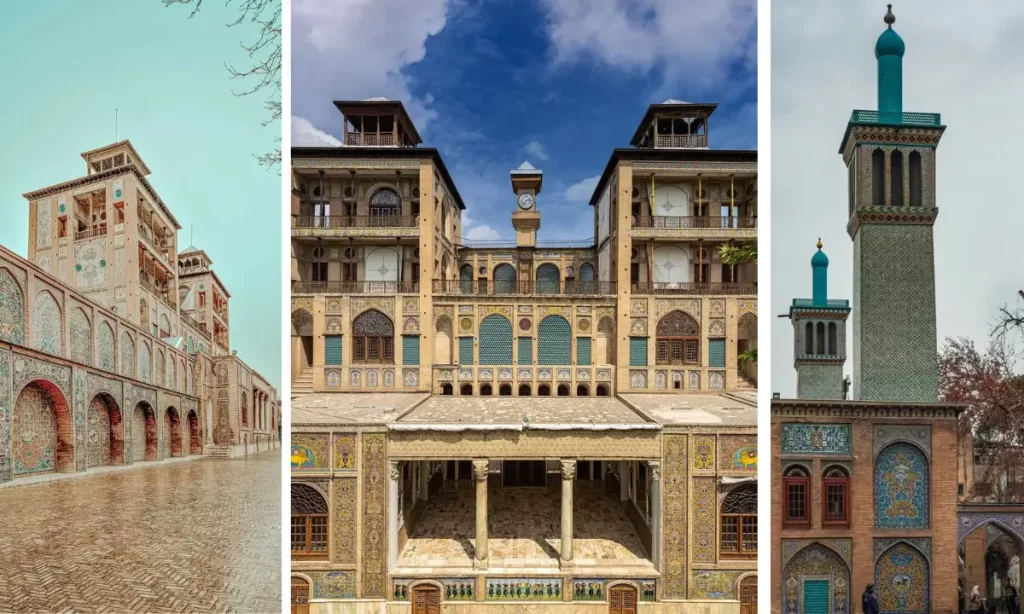


Golestan Palace in Tehran, a luminous beacon within the tapestry of Tehran’s historical sites, proudly stands as a testament to the rich cultural and architectural heritage of Iran, meriting its honored place on UNESCO’s cultural heritage list. This palace, more than just a relic of the Qajar dynasty, has roots extending back approximately 440 years, its construction gradually unfolding to reveal a monument of unparalleled beauty and historical depth.
Exploring the Essence of Golestan Palace
At the heart of Tehran’s historic palaces, Golestan Palace distinguishes itself as a premier destination for those seeking to immerse themselves in the depth of Iran’s royal and cultural legacy. Its name, translating to the ‘Palace of Flowers,’ reflects its scenic location amidst expansive gardens adorned with an array of colorful flowers, further accentuated by majestic planes and cedar trees. This setting is not merely a backdrop but a fundamental component of what makes Tehran Golestan Palace a quintessential symbol of Persian artistic and architectural magnificence.
Golestan Palace during the Qajar dynasty
The palace’s historical significance is amplified by its association with the Qajar dynasty, serving as the residence and administrative center for a succession of Qajar kings. This period marks a golden era in Tehran’s history, with Golestan Palace at its core, embodying the opulence, cultural flourishes, and the political prowess of its inhabitants. The legacy of Agha Mohammad Khan Qajar, Fath Ali Shah, and subsequent rulers resonate within its walls, offering visitors a tangible connection to Iran’s storied past.
Entering the Golestan Palace
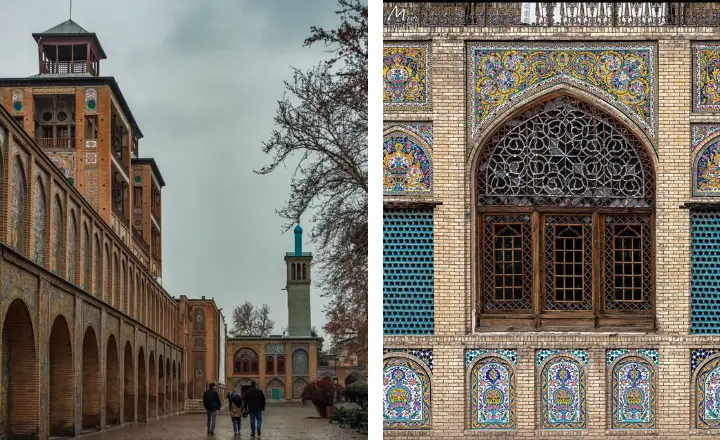
Stepping off the vibrant 15 Khordad Avenue and into the tranquil realms of Golestan Palace is akin to traversing a bridge across time. The chaotic hum of modern Tehran fades into the serene whispers of nature and the echoing footsteps of history within the palace grounds. Here, amidst the architectural splendor and the peaceful gardens, visitors are invited to momentarily live alongside the Qajars, experiencing the splendor of their era through the timeless beauty of their surroundings.
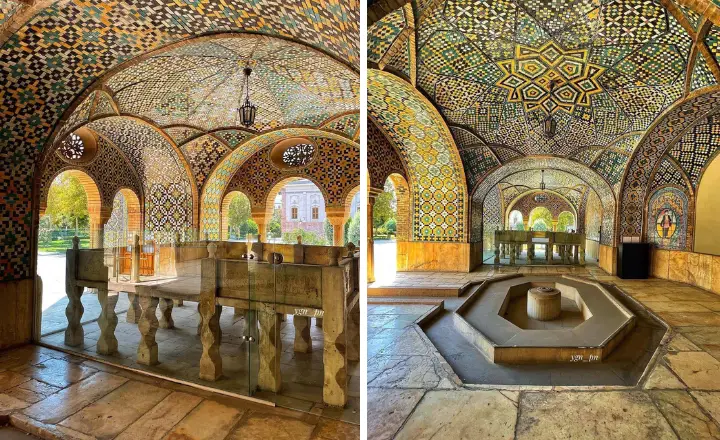
Golestan Palace architecture
Golestan is a historic complex that includes several palaces and royal palaces, all located in a big garden. The architecture of the Golestan Palace represents the era of the development of Iranian architecture and its transfer. During this period, the native architecture of Iran was influenced by political, commercial, and cultural relations with European countries and modeled on the neoclassical architecture of Europe.
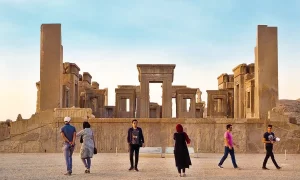
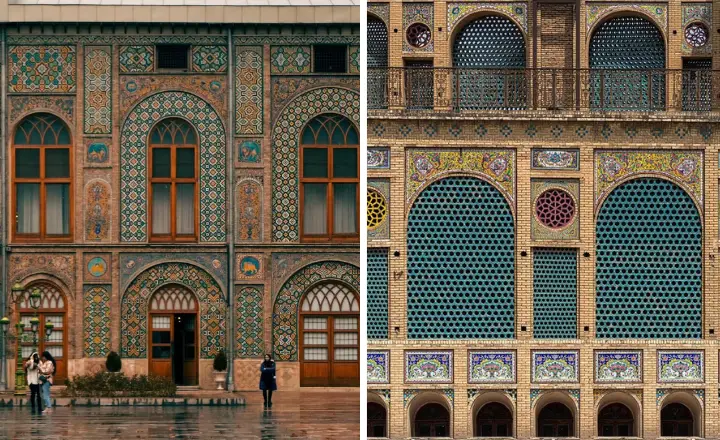
Golestan Palace Architecture and Decorative Elements
Key Architectural Features:
- Tehran School of Architecture: The architectural transformation at Golestan Palace contributed to the emergence of this new style, blending traditional Persian elements with modern influences.
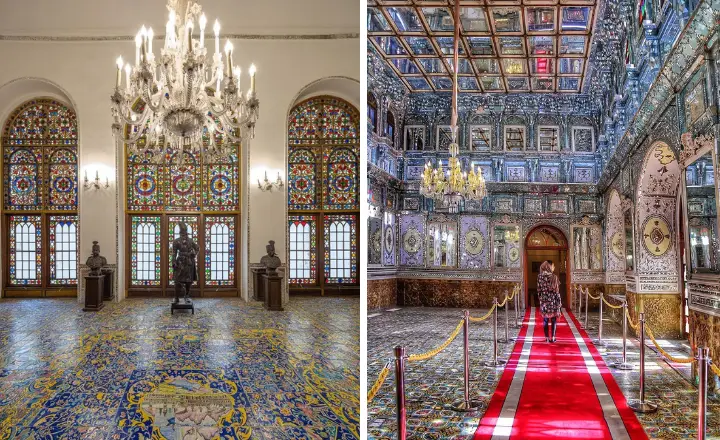
- Diverse Decorations: The palace showcases a rich array of decorative arts including tile work, mirror work, and gold work on wood.
Decorative Themes:
- Tile Work: Features a variety of themes such as mythology, hunting, battles, romance, landscapes, monuments, flora and fauna, and figures of kings, courtiers, and religious motifs.
- Color Palette: Dominantly uses yellow, a color widely used in Qajar dynasty architecture.
Experiences at Golestan Palace
Shopping and Dining:
- Marketplace: Offers a selection of Iranian art, providing visitors with a chance to take home a piece of this enchanting palace.
- Cafeteria: Located within the palace, offering a place to relax and enjoy traditional Iranian drinks and snacks in a setting reminiscent of Qajar era elegance.
Unique Experiences:
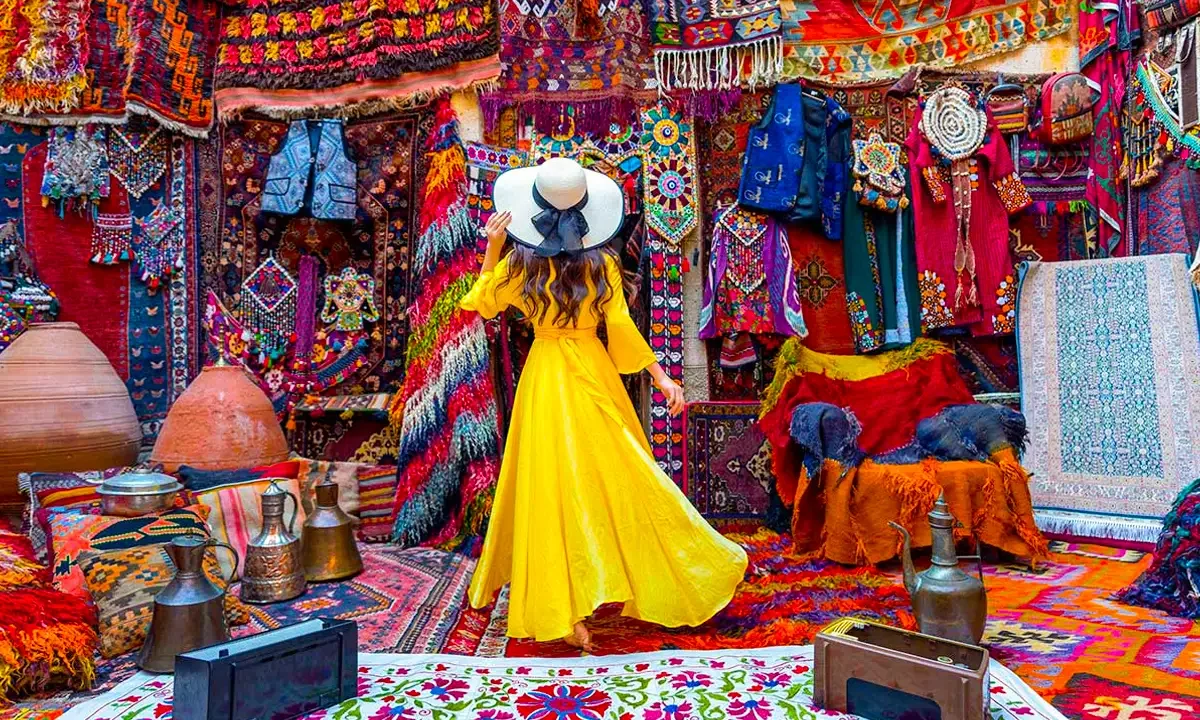
- Photographic Booth: Allows visitors to wear Qajar-era dresses and take unique photographs, creating a personal memento of their visit to Golestan Palace.
More information about the Golestan palace
- Address: Arg Square – 15 Khordad Street – Tehran – Iran (You can go to Golestan Palace by sub wat (15 Khordad station) but we also suggest car rental in Iran especially on the weekends so you can visit other places around that area easily).
- Access time: 9 am till 6 pm in the first six months of the year (9 am till 5 pm in the second six months of the year).
- Entrance Cost for Iranian nationals: 25,000 IRR
- Entrance Cost for foreign nationals: 150,000 IRR (Visiting each palace needs separate tickets. You can check out the price at the entrance to the Golestan Palace.)
- Suggested visit time: about 2 to 5 hours
- Phone number: +982133113335
Last Word
Golestan Palace is more than just a historical site; it’s a bridge to Iran’s rich cultural and royal heritage. With its splendid architecture, intricate decorations, and immersive experiences, the palace invites visitors from around the world to step into a world where history and artistry come alive. As you wander through its opulent halls and tranquil gardens, you’ll not only witness the grandeur of the Qajar era but also the enduring beauty of Persian craftsmanship. A visit to Golestan Palace is a journey through time, offering a glimpse into the soul of Tehran and the legacy of its people.
FAQ
What is Golestan Palace famous for?
It’s known for its stunning Qajar-era architecture, mirror work, and historical importance as a royal complex in Tehran.
Where is Golestan Palace located?
Golestan Palace is located in the heart of Tehran, near the Grand Bazaar and other key historical attractions.
Can you visit Golestan Palace today?
Yes, the palace is open to visitors and includes museums, halls, and beautiful gardens.
Is Golestan Palace a UNESCO World Heritage Site?
Yes, it was designated a UNESCO World Heritage Site in 2013 due to its cultural and architectural significance.
How much time should I spend at Golestan Palace?
A visit usually takes 2–3 hours if you want to explore the main buildings and museum sections.
How old is Golestan Palace?
Golestan Palace dates back over 400 years, with major renovations during the Qajar era in the 19th century.
What does Golestan mean?
“Golestan” means “land of flowers” or “rose garden” in Persian.
What is the architecture of Golestan Palace?
Golestan Palace features a blend of Persian, European, and Russian architectural styles, with elaborate mirror work, tile mosaics, and ornate halls.