Temple of Anahita; the guardian of the water
 Author : asal | Date : Wednesday 09 July 2025 15:50
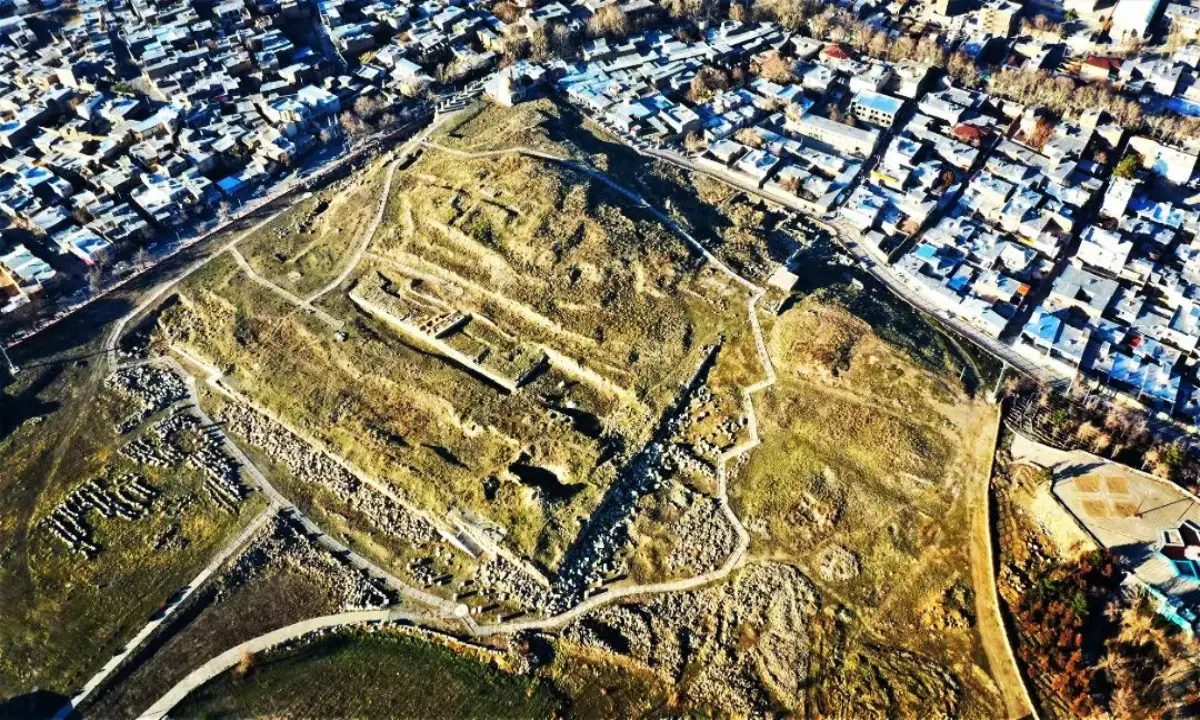
The Temple of Anahita in Kangavar, Iran, is an ancient structure dedicated to the Persian goddess of water and fertility. Constructed during the Parthian era, it stands as a testament to the rich religious heritage of the region. Its impressive design features a central sanctuary surrounded by a series of columns and chambers. The temple's significance extends beyond religious worship, serving as a symbol of architectural prowess and cultural identity. Today, it remains a site of historical and archaeological importance, drawing visitors from around the world to marvel at its ancient splendor.
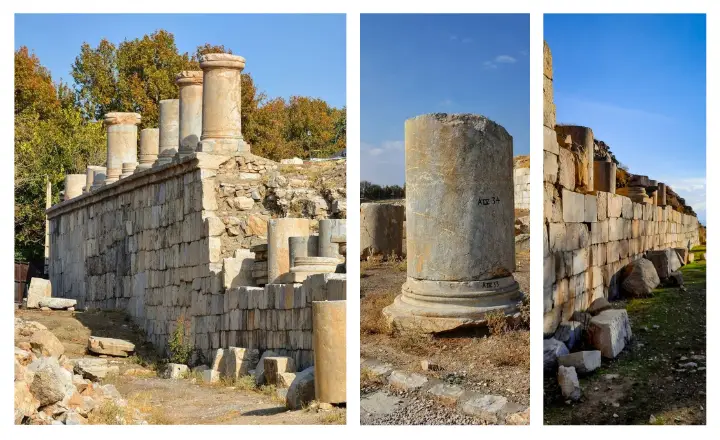
Exploring the Ancient Marvel: The Temple of Anahita in Kangavar
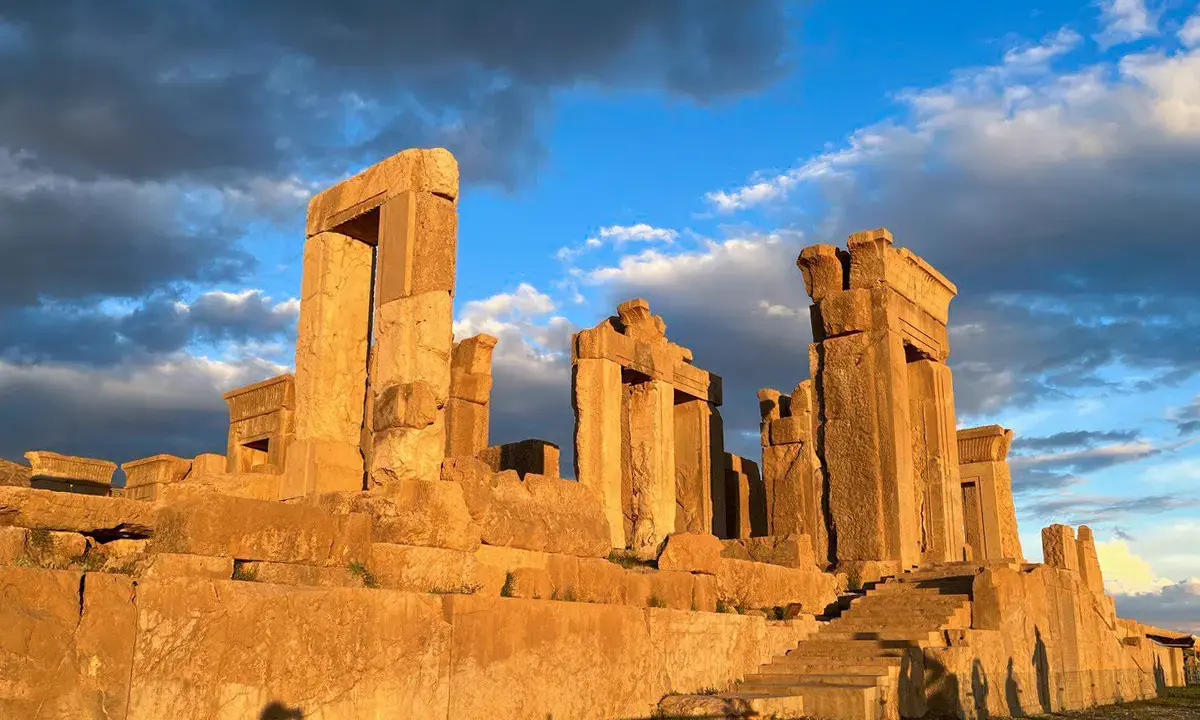
Legend intertwines with history at the Temple of Anahita in Kangavar, where interpretations vary regarding its purpose. Some attribute its construction to venerate Anahita, the guardian angel of springs and rain, symbolizing purity and worship. Alternatively, it's speculated to be an incomplete palace intended for Sassanid King Khusraw Parvez. This architectural wonder, second only to Persepolis in scale, showcases Iran's ancient heritage, dating back to the BC era. Its grandeur and size speak volumes about the cultural and religious significance it held in antiquity, inviting further exploration into the mysteries of ancient Iran.
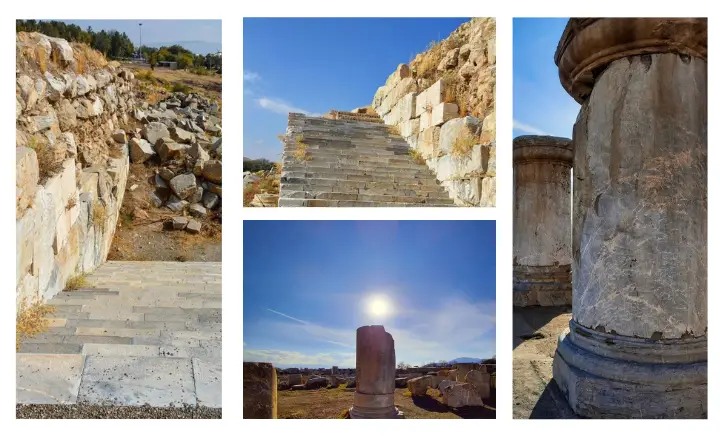
Anahita: The Persian Deity of Water and Fertility
Anahita, revered as a prominent deity in ancient Persian religion, embodies the concepts of water and fertility. She is often depicted as a goddess associated with purity, healing, and abundance, making her a central figure in Persian mythology. Anahita's domain includes rivers, lakes, and springs, reflecting her role as a guardian of water sources vital for sustenance and agriculture in the arid landscapes of ancient Persia. Additionally, she is believed to bestow blessings of fertility upon the land, ensuring prosperous harvests and the well-being of communities. Throughout history, Anahita's worship has persisted, with temples dedicated to her found across the Persian Empire, emphasizing her enduring significance in Persian culture and spirituality.
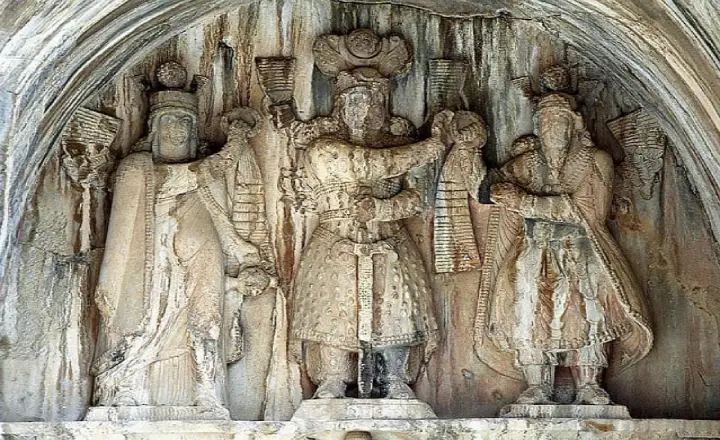
✔️Read More : Takht-e Soleyman; The mysterious treasures of Iranian history
What does Anahita mean?
"Anahita" holds profound significance within ancient Iranian beliefs, denoting cleanliness and purity. Revered as the Goddess of Water, she serves as the guardian angel of springs and rain, embodying essential aspects of life and fertility. Beyond her association with water, Anahita symbolizes concepts of grief, love, and friendship, representing a multifaceted deity deeply ingrained in Persian culture. This belief in Anahita's divine presence dates back to the pre-Zoroastrian era in Iran and has endured through subsequent periods. The tenth day of Aban in the Iranian calendar is dedicated to celebrating "Abanagan," a commemoration devoted to honoring and offering prayers to the goddess Anahid or Anahita, highlighting her enduring influence and significance in Iranian spirituality and tradition.

The Temple of Anahita: Tracing Its Historical Journey
The Temple of Anahita in Kangavar boasts a rich historical tapestry spanning the illustrious epochs of the Achaemenid, Parthian, and Sassanid eras, as evidenced by historical records. Tracing its origins, the temple's foundation is believed to have been laid during the Achaemenid era, with subsequent development and eventual completion occurring under the Sassanid dynasty. However, interpretations vary among scholars, with some positing that it served as an architectural homage to the goddess Anahita during the Parthian period.
Interestingly, insights gleaned from writings by Iranian and Arab historians from the third century AD suggest an alternative narrative, depicting the temple's transformation into a purported palace for the unfortunate Khosrow II. This divergence in perspectives adds layers to the temple's enigmatic history, underscoring its evolution through the annals of time and the myriad interpretations surrounding its purpose and significance.
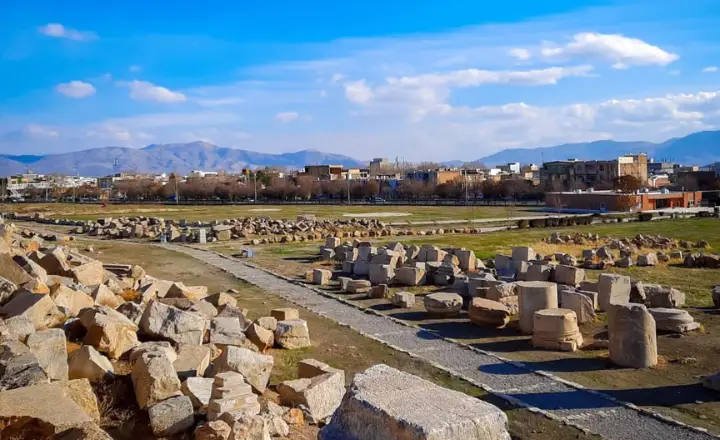
The Transformation of the Temple of Anahita in the Era of Islam
Following the advent of Islam, significant changes swept over the Temple of Anahita, with new structures such as the Imam Zadeh Ibrahim shrine, a mosque, and a bustling bazaar erected in its vicinity. Surveys conducted in the area unveiled remnants of the Seljuk civilization, indicating continued utilization of the site during this period of history.
As time passed, the temple's original significance began to fade from public memory. Unaware of its storied past and cultural importance, subsequent generations gradually constructed neighborhoods and homes upon its grounds. Eventually, the temple's original form was obscured, relegating its once-vibrant history to the realm of myth for the people of Kangavar.
In 37 AD, the Greek geographer Isídōros Kharakēnós, in his work 'Parthian Stations,' initially referred to the temple in Kangavar as dedicated to Artemis. Subsequent research identified it as the Temple of Anahita, the Persian goddess often equated with the Greek Artemis. Thus, it came to be known as the Anahita Temple.
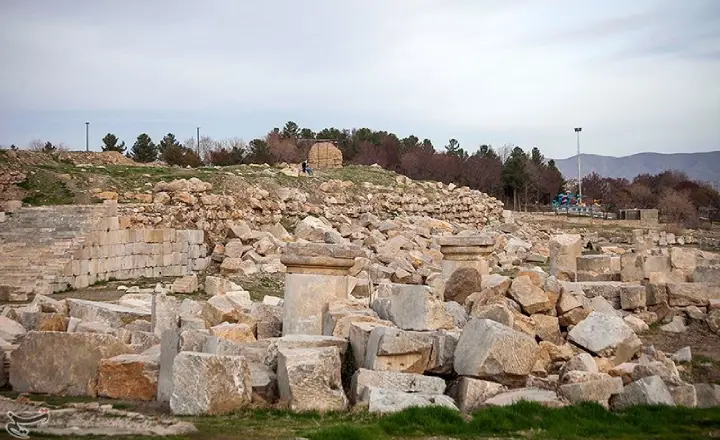
✔️Read More : Kermanshah; the historical city of Iran
Last Word
The Temple of Anahita stands as a timeless symbol of reverence for the vital elements of water and fertility. Across centuries and cultures, it has been revered as the guardian of these life-giving resources, embodying the enduring importance of nature's sustenance in human existence. Through its rich history and cultural significance, the temple reminds us of the intrinsic connection between humanity and the natural world, urging us to cherish and protect these precious gifts for generations to come.
FAQs about the Temple of Anahita
In this section, we answer common questions about the Temple of Anahita, the guardian of water:
Where is the Temple of Anahita located and how can I get there?
The Temple of Anahita is located in Kangavar, Kermanshah Province, Iran. It is easily accessible via main roads and is one of the key historical attractions in the region.
From which historical period does the Temple of Anahita date?
The temple dates back to the Parthian (Ashkanian) era and is dedicated to Anahita, the ancient Iranian goddess of water.
What are the main architectural features of the Temple of Anahita?
The temple’s architecture combines Greek and Iranian styles, featuring large columns and a grand porch, showcasing a unique cultural fusion.
Is the Temple of Anahita open to the public and what are the visiting hours?
Yes, the site is open to visitors, usually from morning until sunset. It is recommended to check local updates for exact visiting hours before planning your trip.
Why is Anahita known as the guardian of water?
Anahita was the ancient Iranian goddess of water, fertility, and purity, and the temple served as a sacred place honoring her protective powers over water resources.
Are there any facilities or guided tours available at the Temple of Anahita?
While basic visitor facilities exist, guided tours can be arranged through local agencies or tour operators to provide deeper insights into the temple’s history and significance.