Discover the Ali Qapu Palace in Isfahan
 Author : shiva | Date : Saturday 12 July 2025 17:48
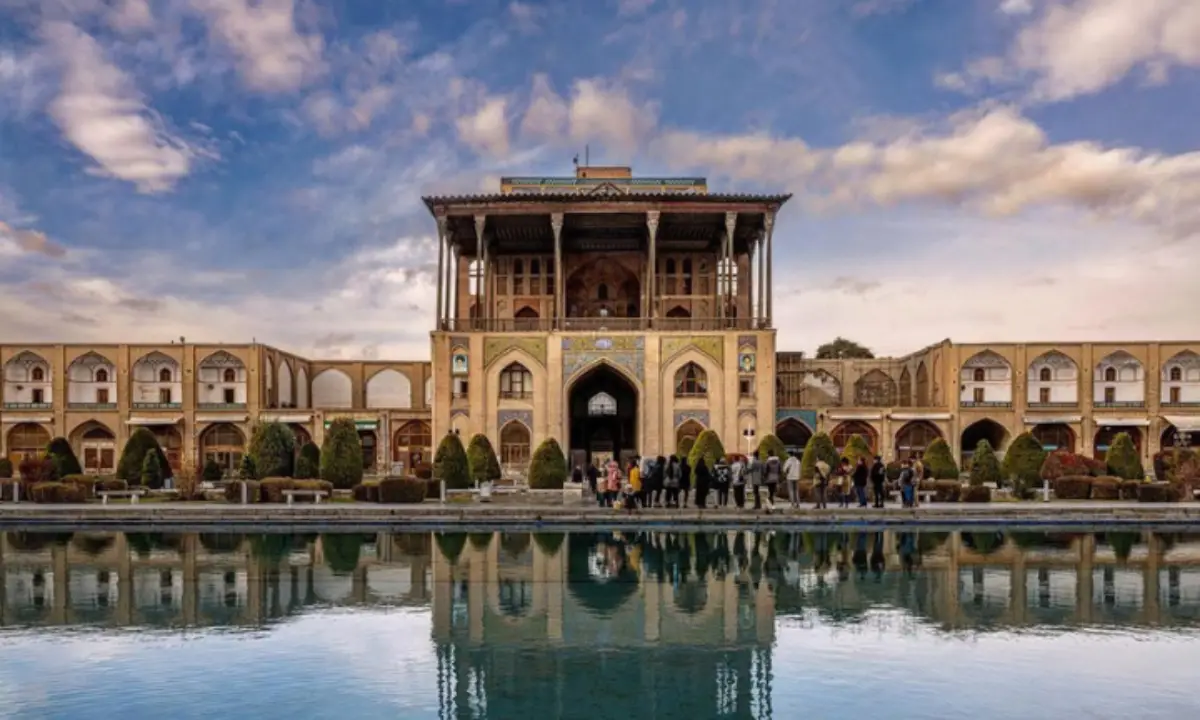
Ali Qapu Palace is located in the west of Naqsh-e-Jahan Square, facing the Sheikh Lotfollah Mosque in the city center of Isfahan. This palace is one of the most important architectural masterpieces of the early 11th century and has world renown.
History of Ali Qapu palace in isfahan, iran
Ali Qapu Palace was built in the year 1054, and its founder is Shah Abbas I Safavid. The king of Safavid, the ambassadors, and great figures in the Inca accepted. The Safavid king met important people, such as ambassadors and great figures in this palace. This palace was the central gateway and the entrance of all palaces built during the Safavid period in the area of the Naghsh-e-Jahan Square of Isfahan. what do you think about Iran's beautiful country and different cities? Stay tuned for information
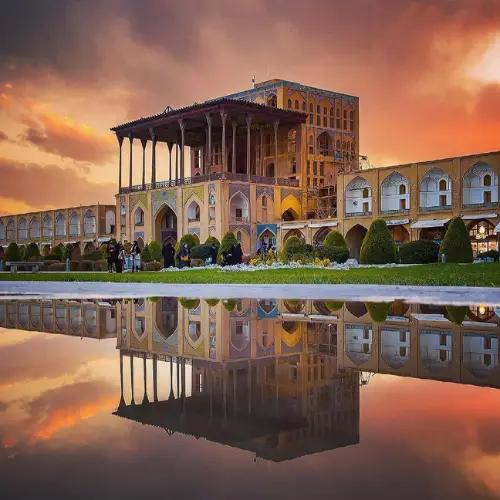
About the building of Ali Qapu palace
From the under-head in the palace, which is all made up of stone, you arrive at the mansion and reach the upper floors by a staircase on both sides. Ali Qapu palace has 6 floors, each with its special decoration. On the ground floor, there is 2 hall, which was dedicated to administrative and civic affairs. On the third floor, there is a large porch with 18 high and lofty columns. There is a marble pond in the middle of this porch.
In general, Ali Qapu Palace consists of two distinct parts: the front entrance to the mansion and the main building of the palace.
The entrance of the palace is ahead of the main building and the entrance to the mansion is in the same area. The entrance has a crescent arch, and on the two floors there are sideways and smaller arches. There is a veranda above the entrance which is open from 3 directions and has a wooden room.

Exterior Design of Ali Qapu Palace in isfahan
The exterior of the Ali Qapu Palace stands as a testament to the grandeur and sophistication of Persian architectural design, capturing the essence of the Safavid era's aesthetic and cultural zenith. The façade of Ali Qapu palace is an imposing yet elegantly crafted structure, adorned with intricate tile work and lofty wooden balconies that offer a panoramic view of Isfahan's Naqsh-e Jahan Square, once the heart of the Safavid capital. This magnificent entrance, flanked by towering columns and decorated with exquisite frescoes, serves not only as a physical gateway but also as a symbolic portal, inviting visitors into a realm where art, politics, and religion intertwined seamlessly.
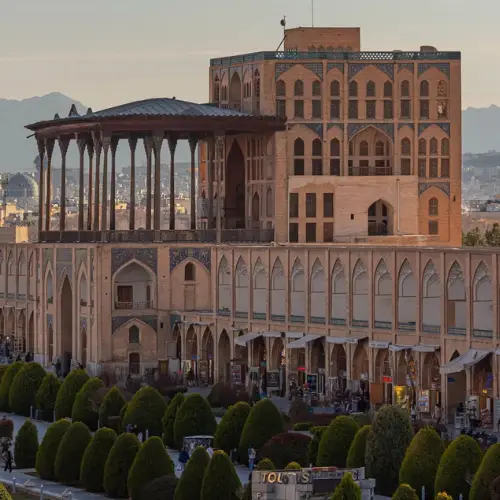
Interior Design of Ali Qapu Palace in isfahan
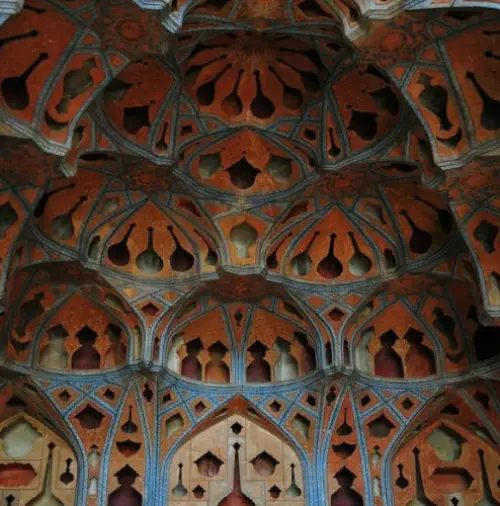
The interior of Ali Qapu Palace is a splendid showcase of Persian craftsmanship, blending elegance and artistry in every corner. As visitors step inside, they are greeted by a world where every surface tells a story, adorned with intricate frescoes, detailed tile work, and ornate wooden carvings. The palace's rooms and halls boast a rich palette of colors and textures, reflecting the sophisticated taste of the Safavid era.
✔️Read More : Isfahan Travel Guide 2024 | Things to Do in Isfahan
Key Highlights of the Interior design:
Music Room: An acoustic marvel, this room features delicate stucco work that resembles musical instruments, creating a unique sound experience.
Royal Reception Hall: Lavishly decorated, this hall was designed for hosting grand ceremonies, with stunning frescoes and elaborate mirror work.
Private Chambers: Intimate spaces with exquisite inlaid doors and finely crafted murals, offering a glimpse into the personal lives of royalty.
Staircase Art: Even the staircases are works of art, lined with beautiful tiles and paintings, guiding visitors through the palace's stories.
The pond with marble edges is located in the middle of the porch, which has fountains; the dock is made of copper. From travel writers such as Tarunya and Shardin, it turns out that in the distant past, the wall of the end of the porch and the surface of the columns were covered with a mirror. There are two spiral staircases in the corners of the first floor, which form communication paths. There are four floors on top of the first floor, both floors in addition to the rooms have a large hall. The first hall opens to the front porch of the mansion by a large doorway. On the wall of this hall, there is a beautiful and colorful artistic painting, which is based on the works of Reza Abbasi.
✔️Read More : Discover Si-o-se-pol Bridge in Isfahan, Iran
Particular features of the palace
The sixth floor has a large hallway, which is completely plastered. The hall, also known as the sound chamber, is based on sound physics and its reflection in a way that, like a sound recording studio, it eliminates excessive resonance of sound and smooth sounds to the whole Part of the forum.
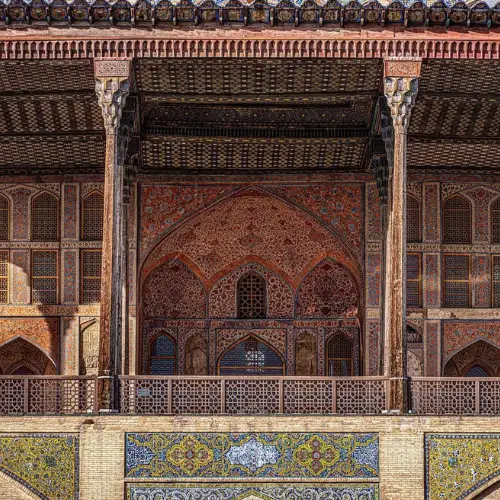
In the last forty years, the threat of destruction, the high palace of Qapu was threatened, as well as due to the attention of the people and government organs to cultural heritage, repairs were done by internal and external specialist departments.
In general, the building of Ali Qapu palace is a beautifully constructed ceremonial building and is another achievement of Safavid-era architecture.
Visitor Guide to Ali Qapu Palace in isfahan
| detail | feature |
|---|---|
| Naqsh-e Jahan Square, Isfahan, Iran | Location |
| 9:00 AM - 3:00 PM | Opening Hours |
| 1 dollars | Entry Fee |
| Spring (March to May) and Autumn (September to November) | Best Time to Visit |
| 1-2 hours | Recommended Duration |
| Allowed outside, restrictions may apply inside | Photography |
✔️Read More : Menar Jonban in Isfahan
Last Word
The Ali Qapu Palace in Isfahan is a magnificent representation of Persian architecture and history. Built in the 11th century by Shah Abbas I of the Safavid Dynasty, it served as a grand entrance to the royal palaces within Naqsh-e-Jahan Square. The palace is renowned for its six floors, each uniquely decorated, including the impressive third-floor porch with 18 columns and a marble pond. Notably, the sixth floor, known as the sound chamber, is ingeniously designed for acoustic perfection. Despite threats of destruction over the years, restoration efforts have preserved this architectural wonder. Today, Ali Qapu Palace stands as a testament to the Safavid era's architectural achievements and continues to attract visitors from around the world, making it a must-see destination in Isfahan.
FAQ
Here are the most frequently asked questions about visiting Ali Qapu Palace in Isfahan.
What is the history of Ali Qapu Palace in Isfahan?
Ali Qapu Palace was built in 1054 by Shah Abbas I of the Safavid Dynasty. It served as the entrance to the royal palaces within Naqsh-e-Jahan Square in Isfahan and was used to host important meetings with ambassadors and foreign dignitaries.
What are the key features of Ali Qapu Palace?
Ali Qapu Palace consists of six floors, each with unique decorations. Notable features include the third-floor porch with 18 columns, a marble pond, and the sixth-floor sound chamber, designed to eliminate excessive resonance for perfect acoustics.
What are the best times to visit Ali Qapu Palace?
The best time to visit Ali Qapu Palace is during Spring (March to May) and Autumn (September to November), when the weather is mild and ideal for sightseeing.
How long should I plan to visit Ali Qapu Palace?
It is recommended to spend 1-2 hours visiting Ali Qapu Palace to fully appreciate its architecture, history, and the stunning views of Naqsh-e Jahan Square.
Are there hotels near Ali Qapu Palace in Isfahan?
Yes, there are several hotels near Ali Qapu Palace, including:
- Hotel Abbasi: Luxurious and historic.
- Isfahan Traditional Hotel: Budget-friendly and authentic.
- Keryas Hotel: Modern amenities, close to the square.
Is photography allowed at Ali Qapu Palace in Isfahan?
Photography is allowed outside the palace, but restrictions may apply inside, so it's advisable to check with the staff before taking pictures.
Where can I rent a car in Isfahan?
Saadatrent offers comprehensive car rental services in Isfahan, including both economical and luxury vehicles to help you explore Isfahan and its surrounding areas comfortably.
What are the parking facilities like near Ali Qapu Palace in Isfahan?
Public parking spaces are available around Naqsh-e Jahan Square and the adjacent streets. However, parking can be limited due to the central location and pedestrian zones. It's recommended to use public transport or taxi services for easier access.