Discover the Qazvin Chehel Sotoun Palace
 Author : shiva | Date : Monday 16 February 2026 14:01
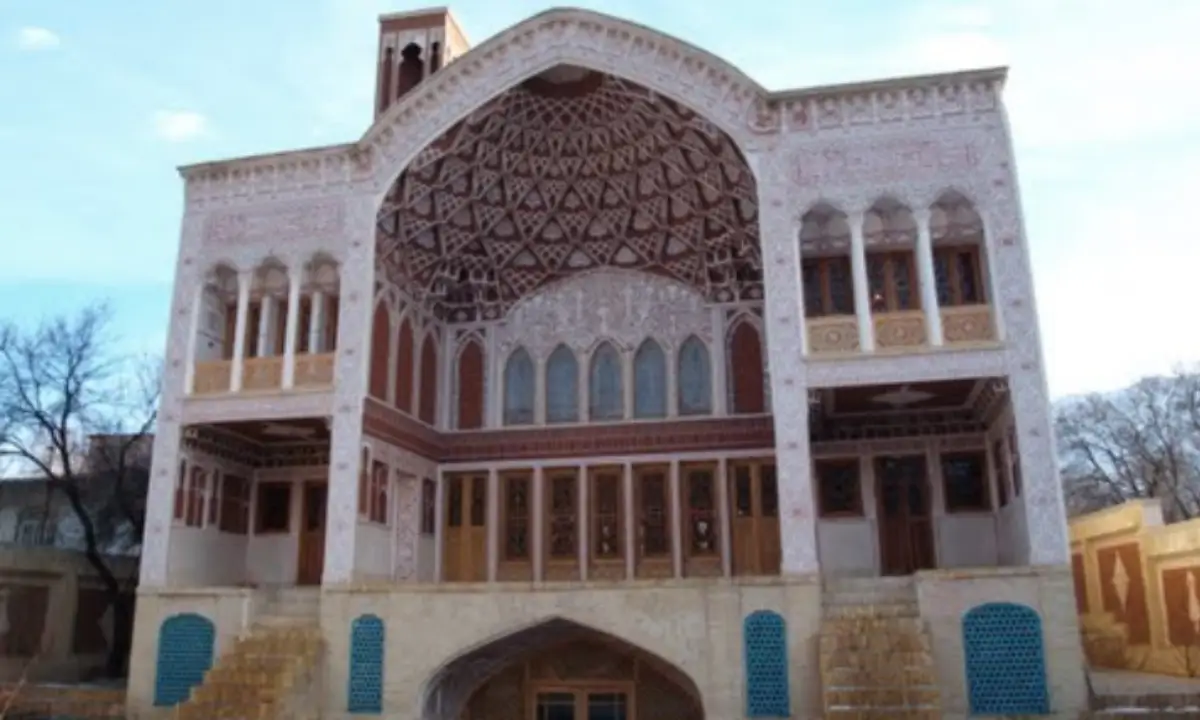
Qazvin Chehel Sotoun Palace
When the name of the qazvin Chehel Sotoun Palace comes out, everybody's thoughts go to the Chehel Sotoun Palace of Isfahan. Perhaps fewer people know that there is another Chehel Sotoun palace in Qazvin, which was built on the orders of Shah Tahmasb, the second king of the Safavid dynasty.
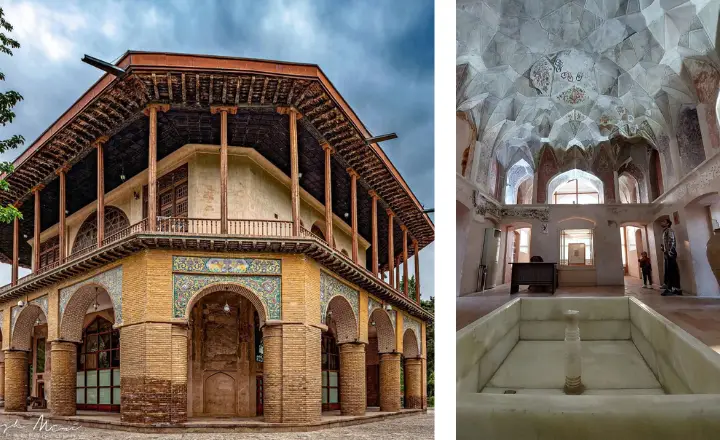
This palace is also known as the Paleolithic Mansion, located in the heart of the historical part of Qazvin city. The Chehel Sotoun Palace, at the time when Qazvin was the capital of Iran, was the king's Mansion.
Today, Qazvin Chehel Sotoun Palace has become a museum of calligraphy, and works by some Iranian calligraphers and along with historical works that were gained from this palace, are shown here and are one of the favorite Iran tourist places for tourists.

Qazvin Chehel Sotoun Palace history
Qazvin Chehel Sotoun Palace is one of the most beautiful and valuable monuments of the city of Qazvin during the Safavid period. King Tahmasb, due to the attacks of the Ottoman Turks, decided to transfer the capital from Tabriz to Qazvin.
According to the poems that came out of the chalkboard on the front of the hall: "The Most Blessed Buildings of the World" Sentence, which is based on the letters of Abjad in 1057 AH, is said that this Palace was built in the fifth year The reign of Shah Abbas II.
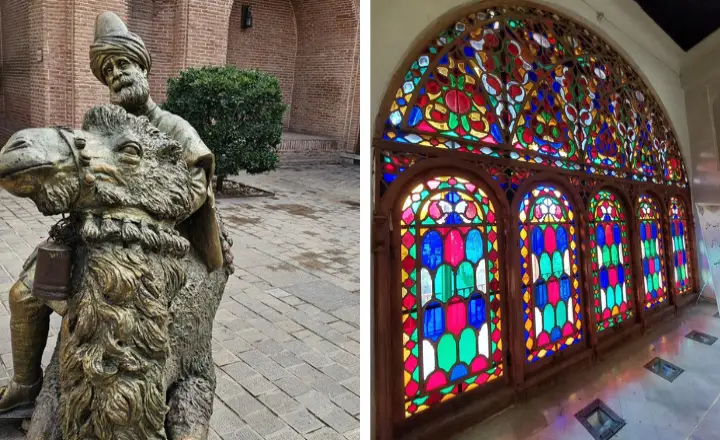
Although most of the historical quotations state that this building and garden were built on the orders of Shah Tahmasb Safavid, some sources say that this building was constructed in the time of Shah Abbas, or it was Rebuilt in its present form. It is also quoted that building this Palace palace was inspired by Hasht Behesht (8 paradises) Palace.
Chehel Sotoun Palace architecture
Qazvin Chehel Sotoun Palace is an octopus-like building with an approximate area of 500square meters, built based on a Turkish architect's map on two floors, with halls and small rooms on each floor. The first-floor paintings are an example of the Qazvin School of Painting and have a worldwide reputation.
The roof of the first floor has beautiful Mogharnas, and there is a pond at the bottom of the building, which is located in the north and south of the building, like the pool, and the water makes the air inside the building flow.
Of course, only the central and southern ponds remain and have been repaired, but the northern pond has been destroyed and the flow of water has been cut off to prevent moisture.
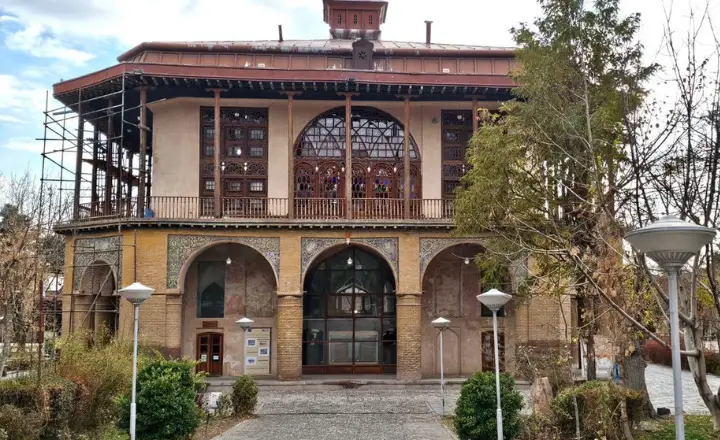
The floor of the building was in the past a carpet brick, but today it is covered with pottery ordered by the cultural heritage to be restored. Access to the lower and upper floors in the past through the eastern staircase that is blocked today and entering the northern staircase.
This staircase was also found in the carpet bricks, but today it is restored with marble. The high hall has beautiful vivid colors, with its colored glass from Germany, and it shows four seasons in archeology and Iranian architecture. Green (spring) red (summer) yellow (autumn) blue (winter).
Qazvin Chehel Sotoun Palace paintings
Paintings on the walls and roofs have been damaged during this time. Because Qazvin Chehel Sotoun Palace became a governor and they covered the paintings with white plaster, which cause a lot of damage to the decoration.
✔️Read More : The Cantor Church in Qazvin, Iran Discover
Accommodations and Amenities Near qazvin Chehel Sotoun
distance:1 km | Hotel Safir | Hotels |
distance:2.3km | Minoo Hotel | |
distance:1.2 km | Iran Hotel | |
distance:200m | Eqbali Restaurant | Restaurants |
distance:1 km | Nofel Loshato Restaurant | |
distance:500 m | Apple Restaurant | |
distance:400 m | taleqani parking | Parking |
distance:260 m | ferdowsi grand parking | |
distance:700m | public parking |
✔️Read More : Qazvin travel guide
Last Word
The Qazvin Chehel Sotoun Palace stands as a magnificent testament to Iran's rich cultural heritage and architectural brilliance. Originally built under the orders of Shah Tahmasb of the Safavid dynasty, this palatial structure reflects the grandeur of Persian royal residences. Now serving as a museum of calligraphy, the palace offers visitors a unique glimpse into the artistry of Iranian calligraphers, along with a display of historical artifacts from the palace itself. Its distinctive architecture, featuring an octopus-like layout, vibrant frescoes, and beautifully crafted Mogharnas, symbolizes the artistic and cultural zenith of the Safavid era. Whether for its historical significance, architectural splendor, or its role in preserving the art of calligraphy, the Qazvin Chehel Soton Palace is indeed one of the most cherished landmarks in Iran, inviting tourists from around the world to explore its timeless beauty.
FAQs about Qazvin Chehel Sotoun Palace
In the following section, we answer some of the most common questions about visiting the Chehel Sotoun Palace in Qazvin, one of the most iconic Safavid-era monuments:
What is the historical significance of the Chehel Sotoun Palace in Qazvin?
The Chehel Sotoun Palace in Qazvin was built during the Safavid dynasty and served as a royal pavilion and government hall when Qazvin was the capital of Iran.
Is the Chehel Sotoun Palace in Qazvin the same as the one in Isfahan?
No. While both are called Chehel Sotoun, they are different monuments. The Qazvin version is older and has a unique architectural style compared to the larger palace in Isfahan.
What are the visiting hours for Chehel Sotoun Palace in Qazvin?
The palace is generally open to visitors daily from 9:00 AM to 5:00 PM, though hours may vary slightly on public holidays.
How much is the entrance fee for Chehel Sotoun Palace?
The entrance fee is very affordable—usually around 1–2 USD for international tourists, with discounts for students or large groups.
What can visitors see inside the Chehel Sotoun Palace?
Inside the palace, you can see Safavid-era artwork, wooden ceilings, beautiful arches, and an exhibition of Qazvin’s historical photographs and documents.
How can I reach the Chehel Sotoun Palace from central Qazvin?
The palace is located in the city center and can easily be reached by foot, taxi, or rental car. It’s near other attractions like the Qazvin Bazaar and Ali Qapu gate.